House Foundation

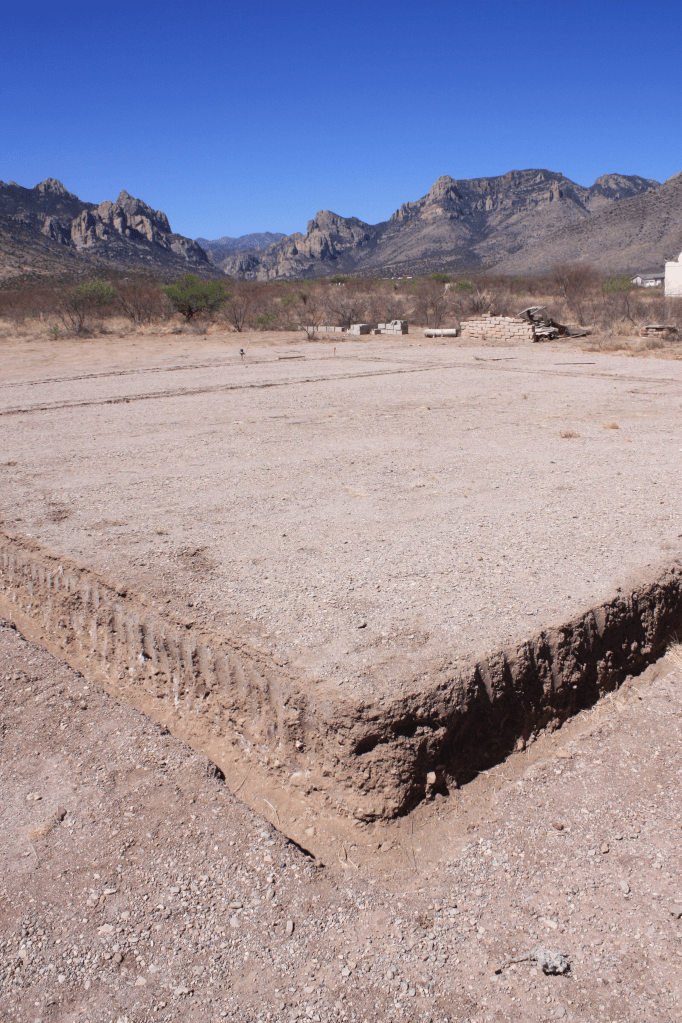
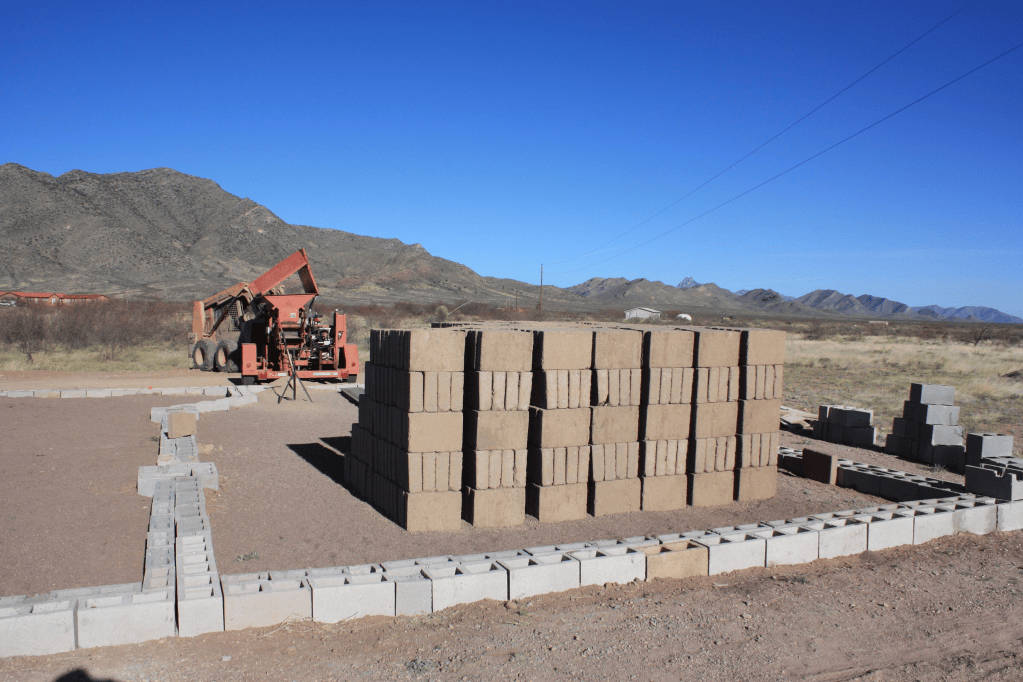
The well (actually a well-share), septic tank, and a compressed building pad were installed before bringing in the compressed earth block (CEB) manufacturing.
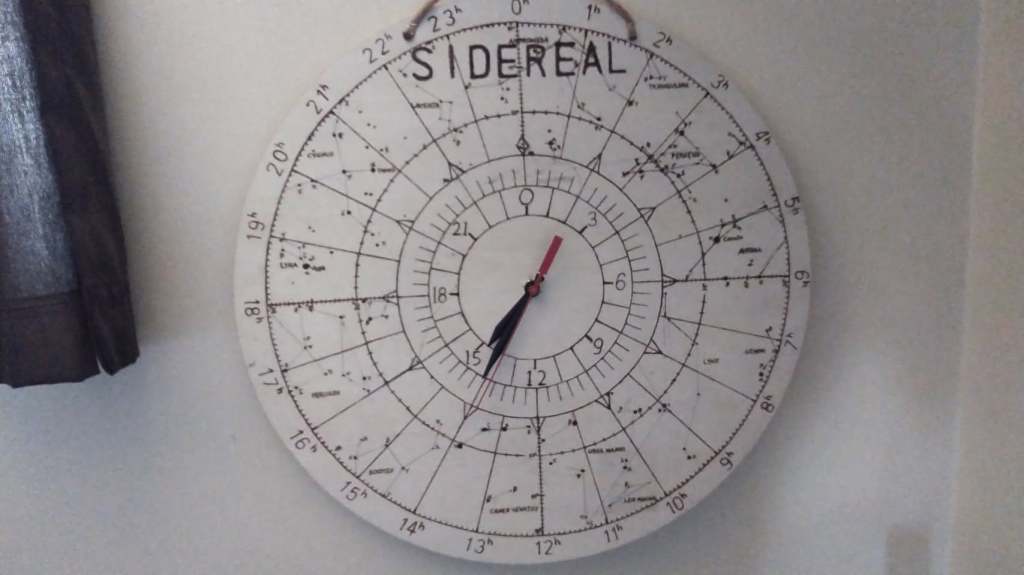
This is a SIDEREAL clock I made. The idea is that if you go outside and orient it NORTH, so the base of the hour hand is the north star, rotate until the hour hand points straight up, the star chart matches the sky. (The usual way to describe sidereal time is that it is the right ascension currently crossing the south meridian.) It’s wood-burned on a pine disk. The clock mechanism can be ordered from https://www.tindie.com/products/nsayer/crazy-clock/
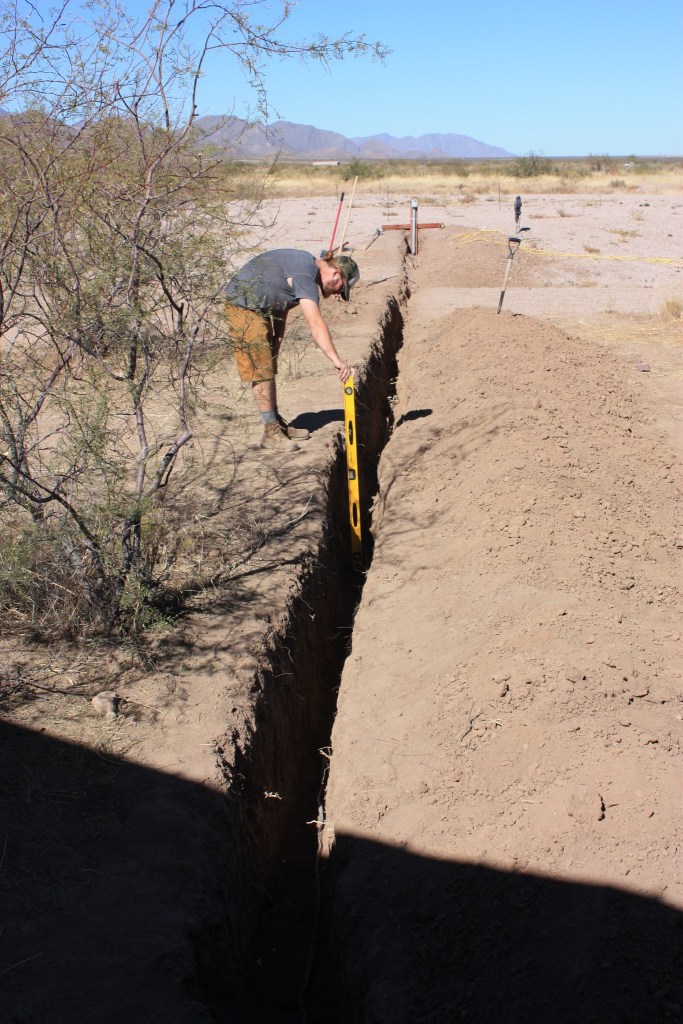
Son Luc measures trench to carry power to house. Used 4-strand 10 gauge solid copper UF cable.
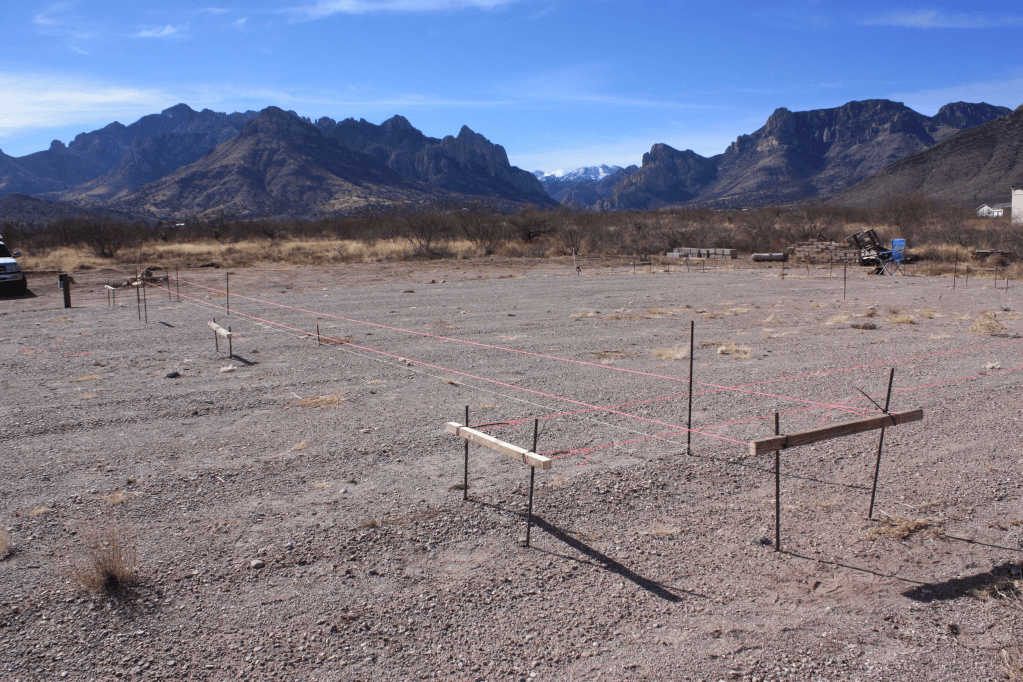
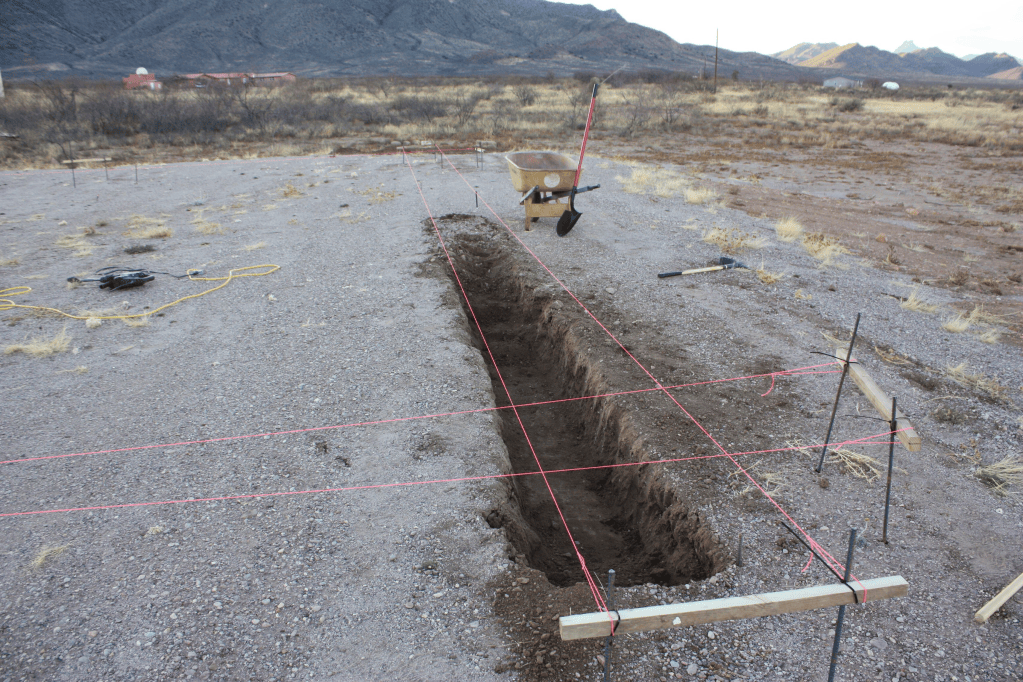
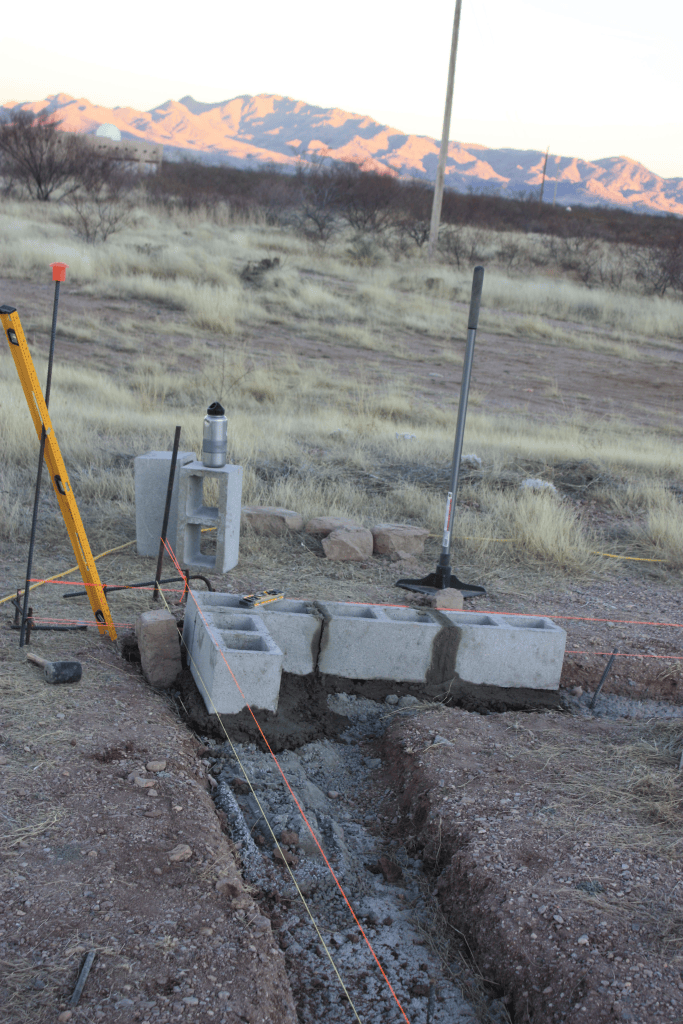
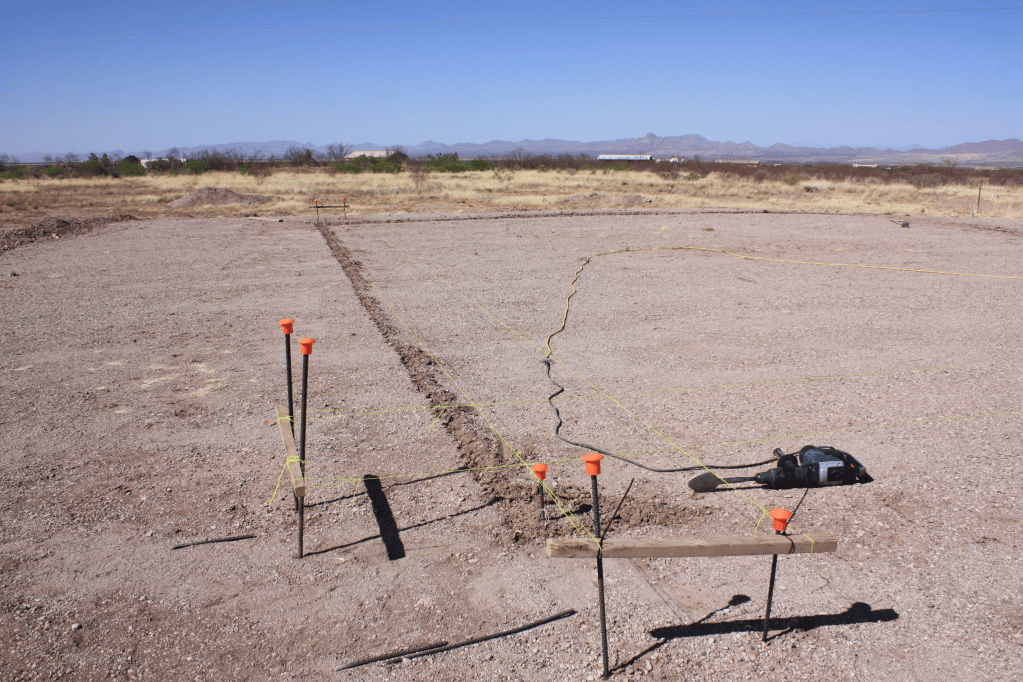
String lines to lay out the footer trenches. 13 January, 2022.
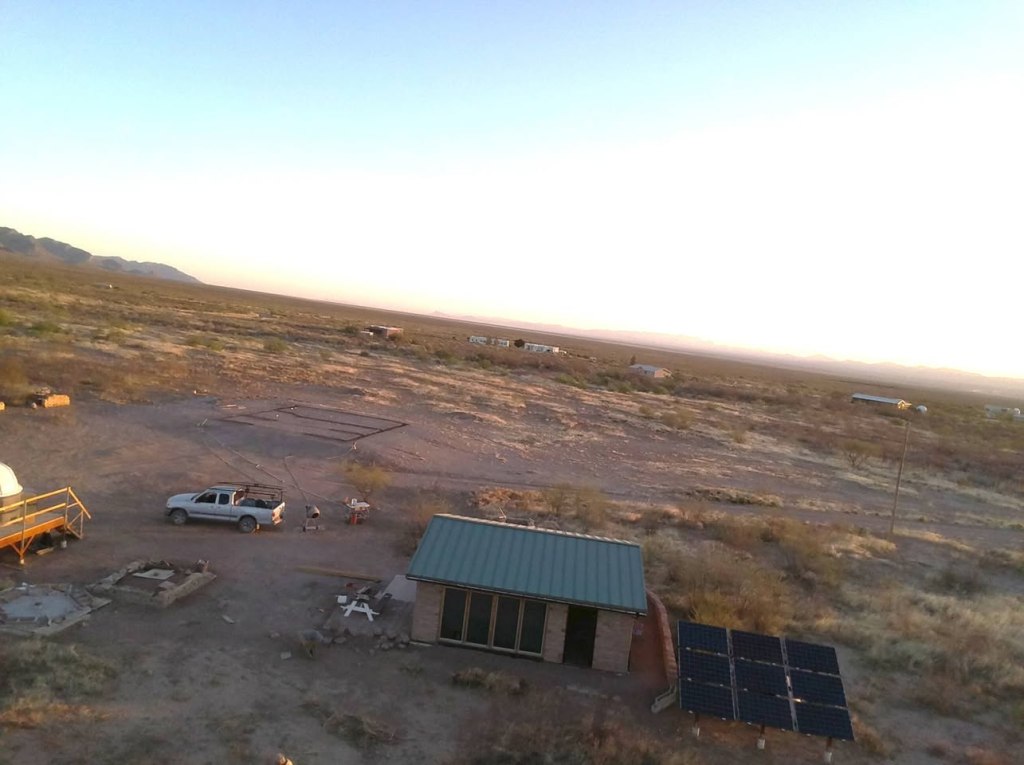
Most people would have brought in a backhoe. I used the electric hammer drill seen on the left.
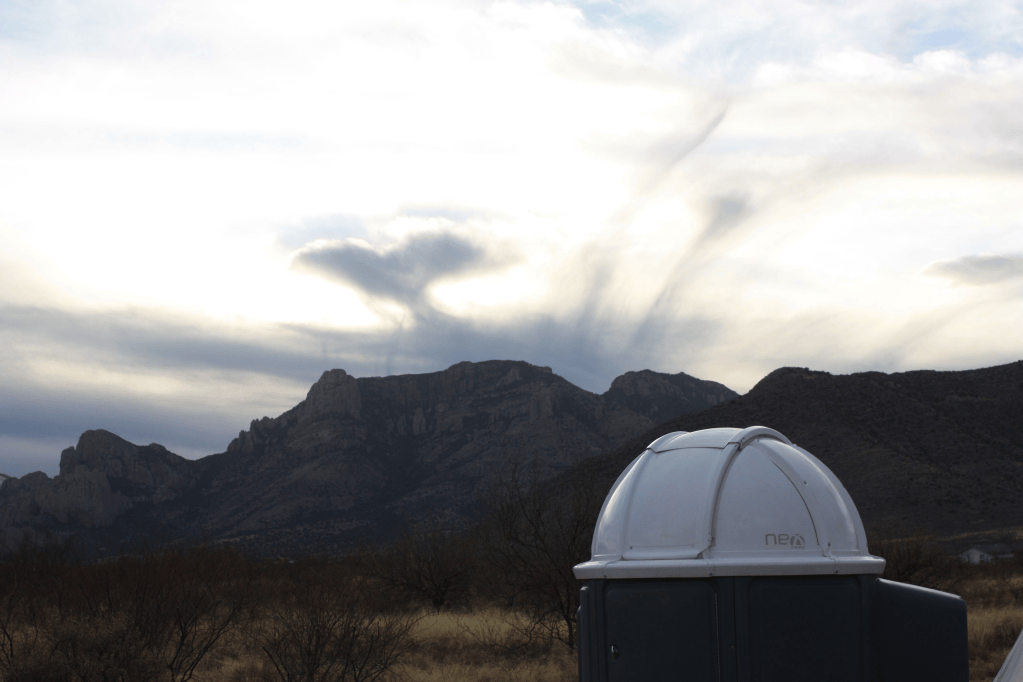
“Do you see yonder cloud that’s almost in shape of a camel?
Polonius: By the mass, and ‘tis like a camel, indeed.
Hamlet: Methinks it is like a weasel.
Polonius: It is backed like a weasel.
Hamlet: Or like a whale?
Polonius: Very like a whale.”
― William Shakespeare, Hamlet
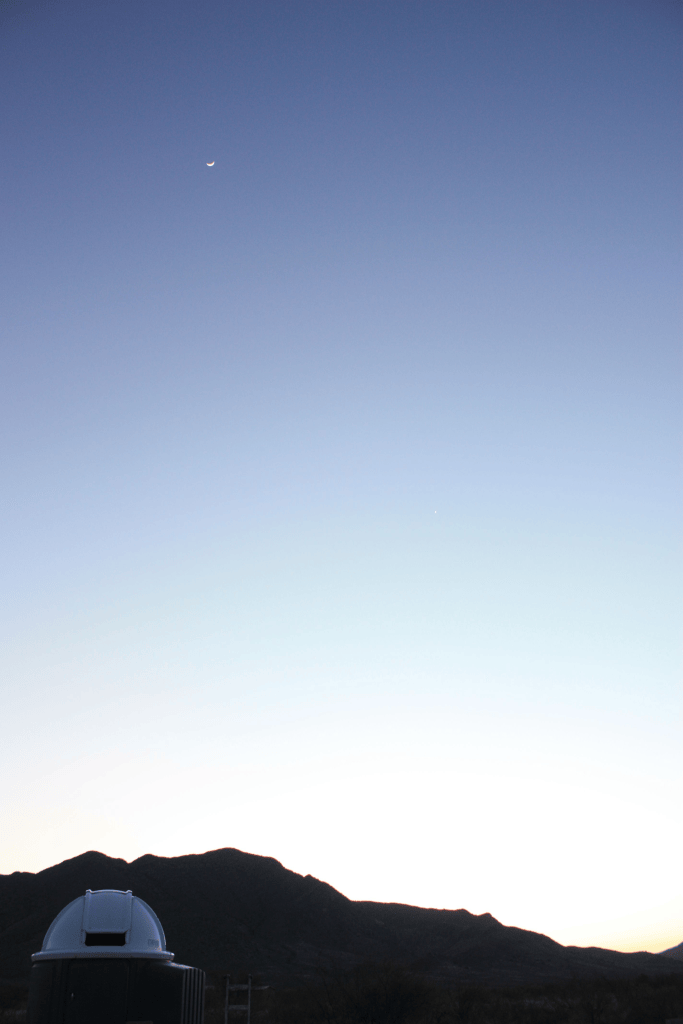
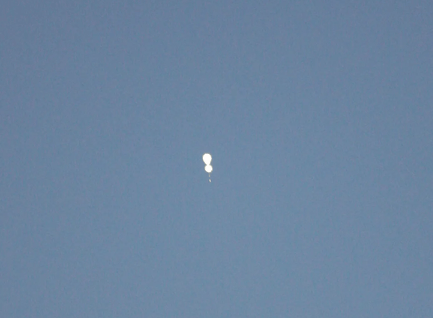
One evening this bright false-Venus showed up. It was an unmanned test flight of a balloon meant for commercial stratosphere tourism. Launched out of Tucson, it eventually landed in the Atlantic.
200 mm DSLR, cropped. This surprise visitor was a World View Enterprises Stratollite, launched from Spaceport Tucson, Arizona, on May 5, 2022. Flight duration: 6 days, 17 hours, 40 minutes. Final location: Atlantic Ocean, approximately 13 km west of Bimini. This was the evening of May 5.
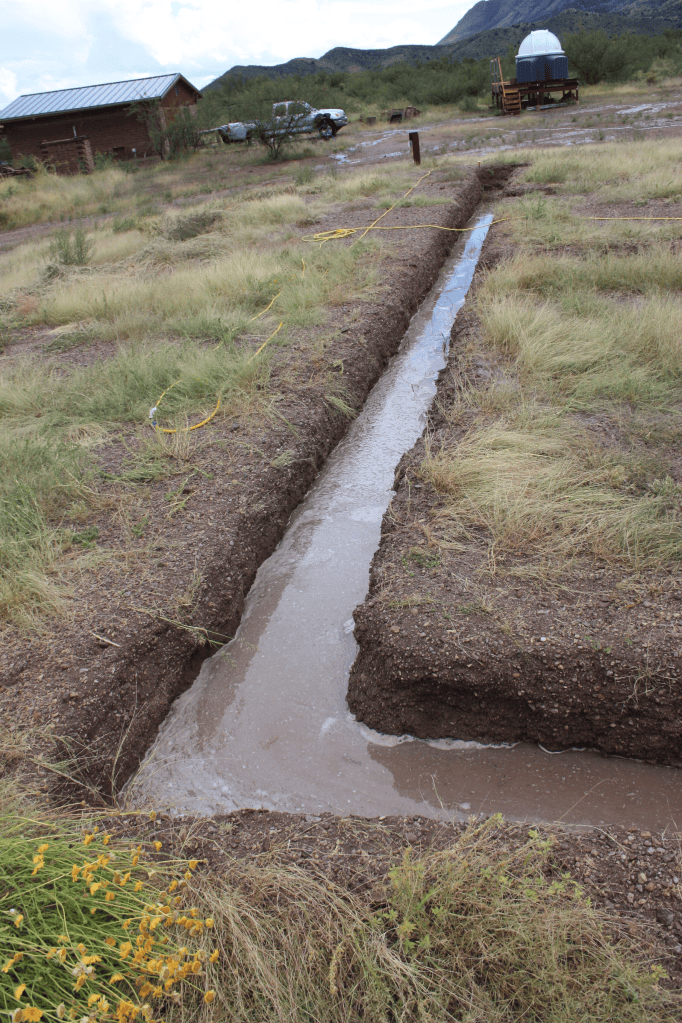
Trench was made 18 inches deep.
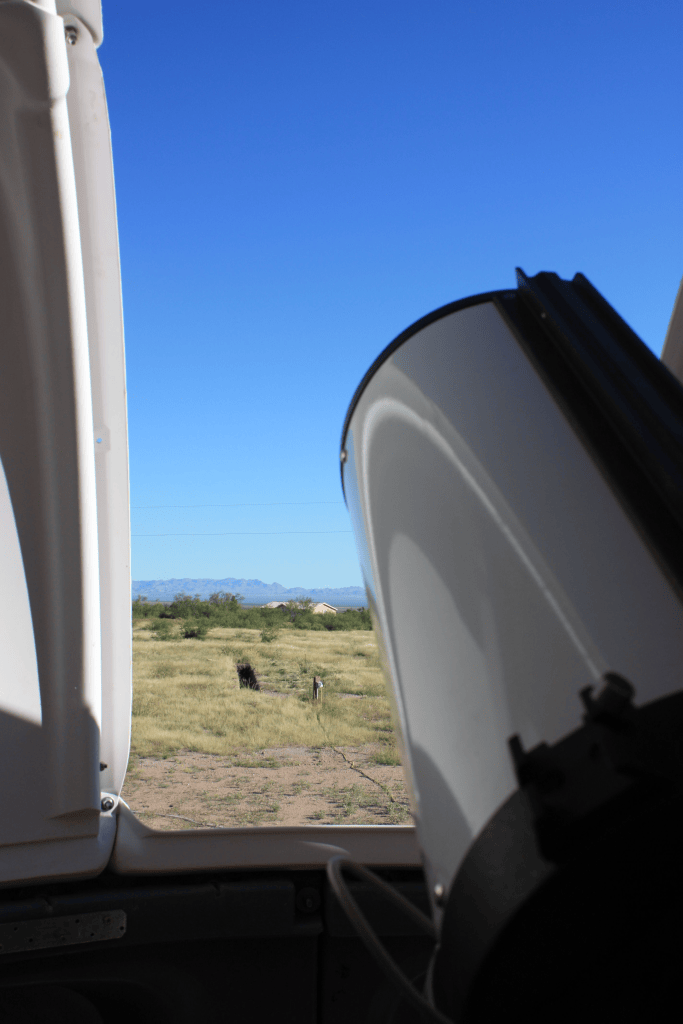
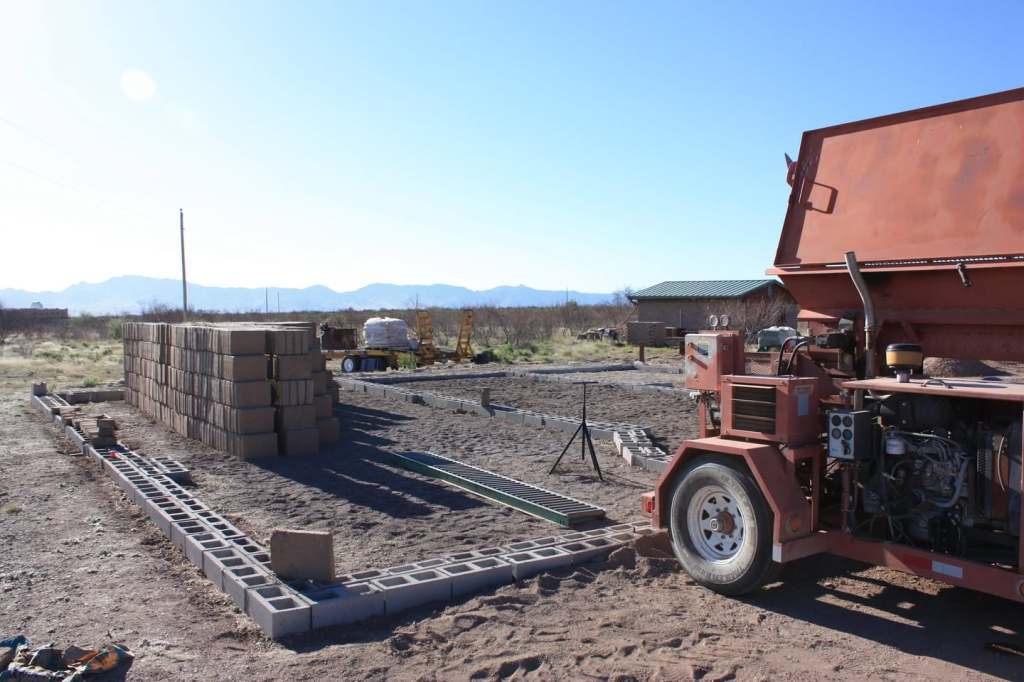
Building pad in distance beyond the truck, with beginnings of the footer trenches. I avoided using fossil fuels whenever possible, so the trenches were dug with an electric Bosch SDS-Max corded hammer-drill.
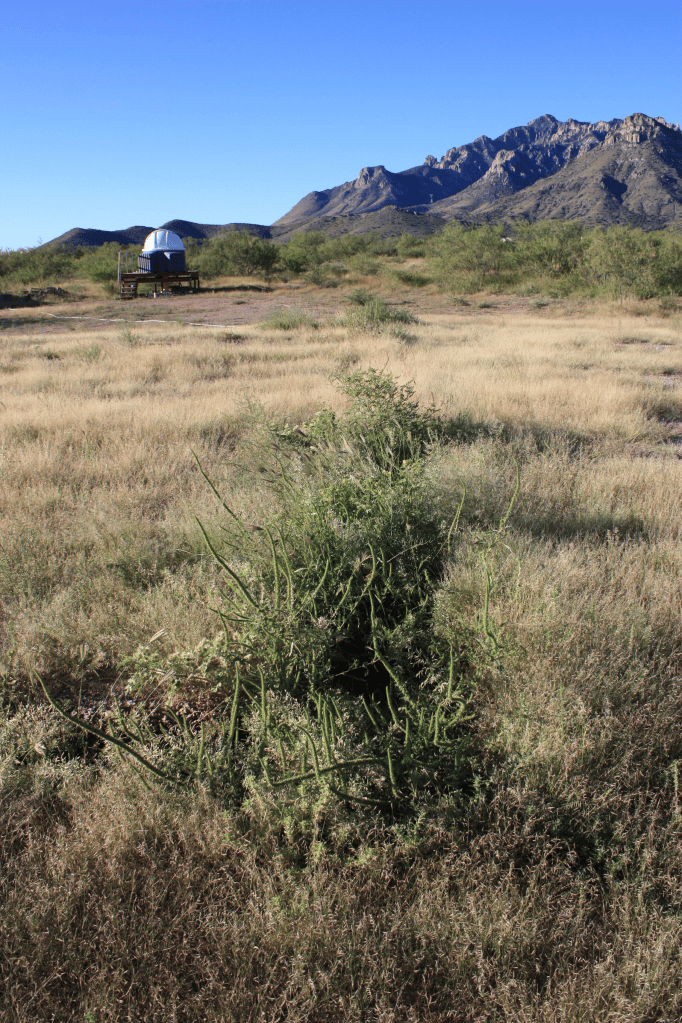
Upon returning after the summer monsoon rains I found the trench filled with weeds.
And after weeding more rain came, but it was a positive: the ground was softened up for digging.
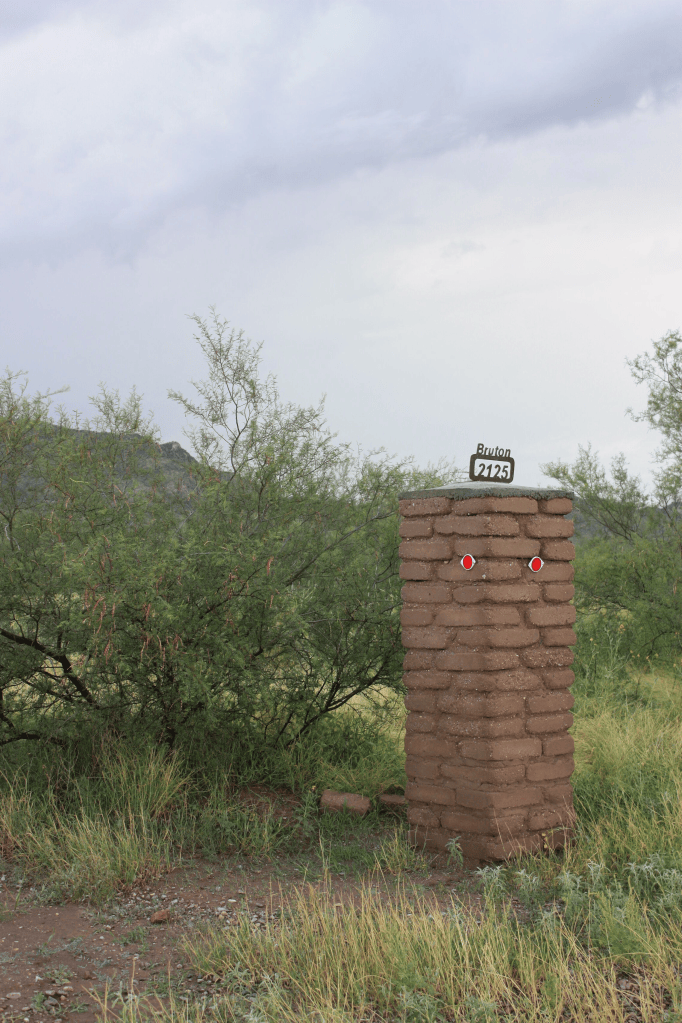
About this time I built this pillar at the end of the driveway. Rick Beno, ASV full-time resident who works in metal a lot, graciously made the iron number plate for me.
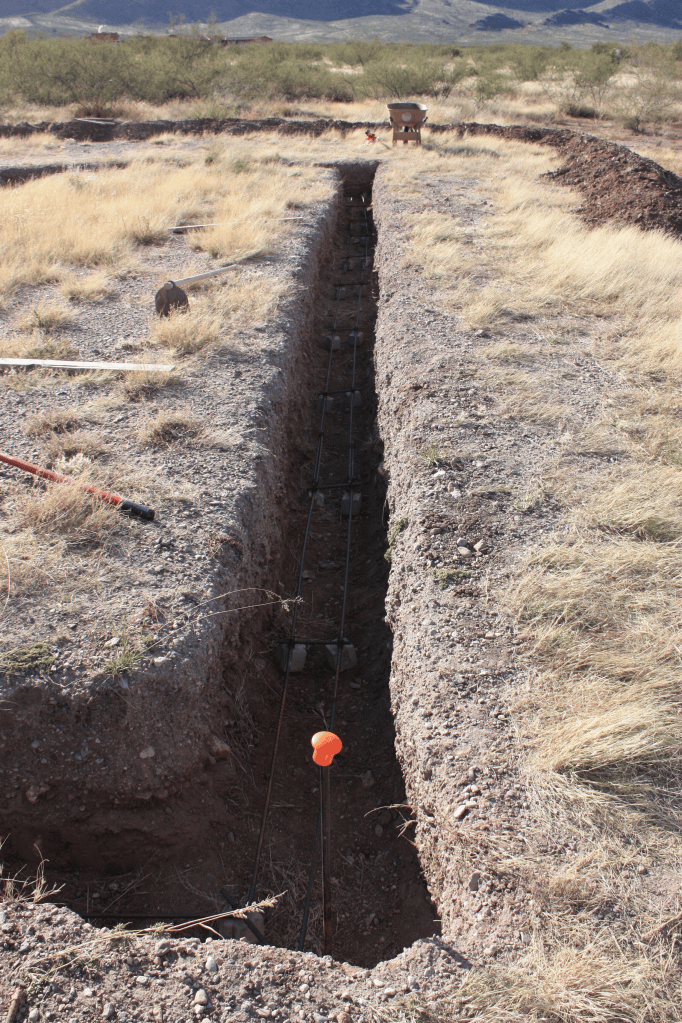
It took ’till early November, 2022 for me to finish the trench digging. Rebar is placed.
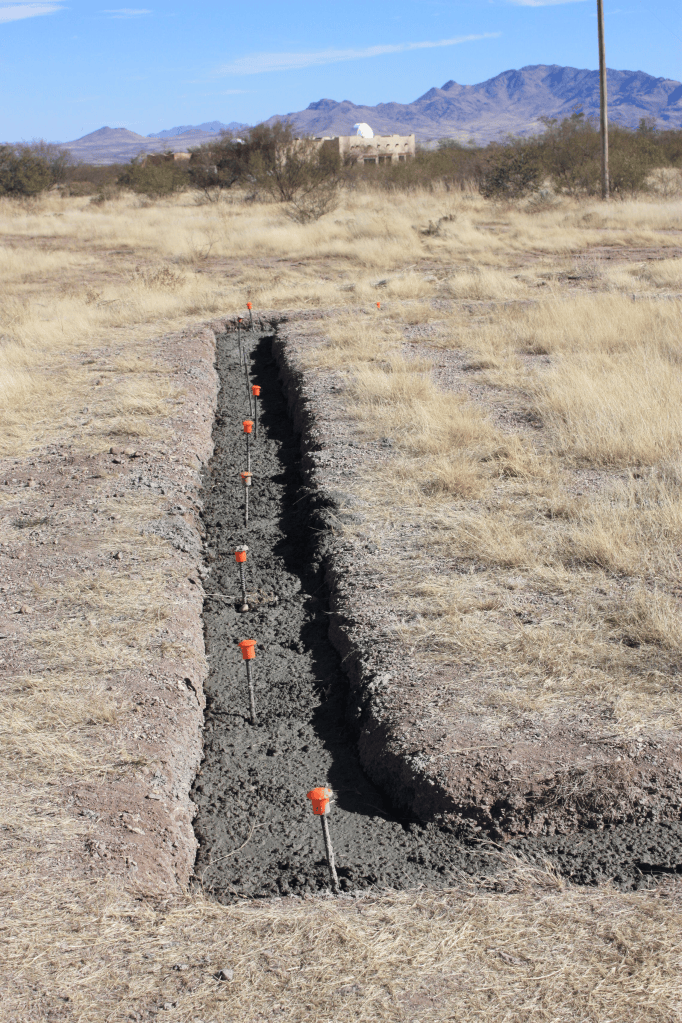
Concrete placed December 1, 2022.
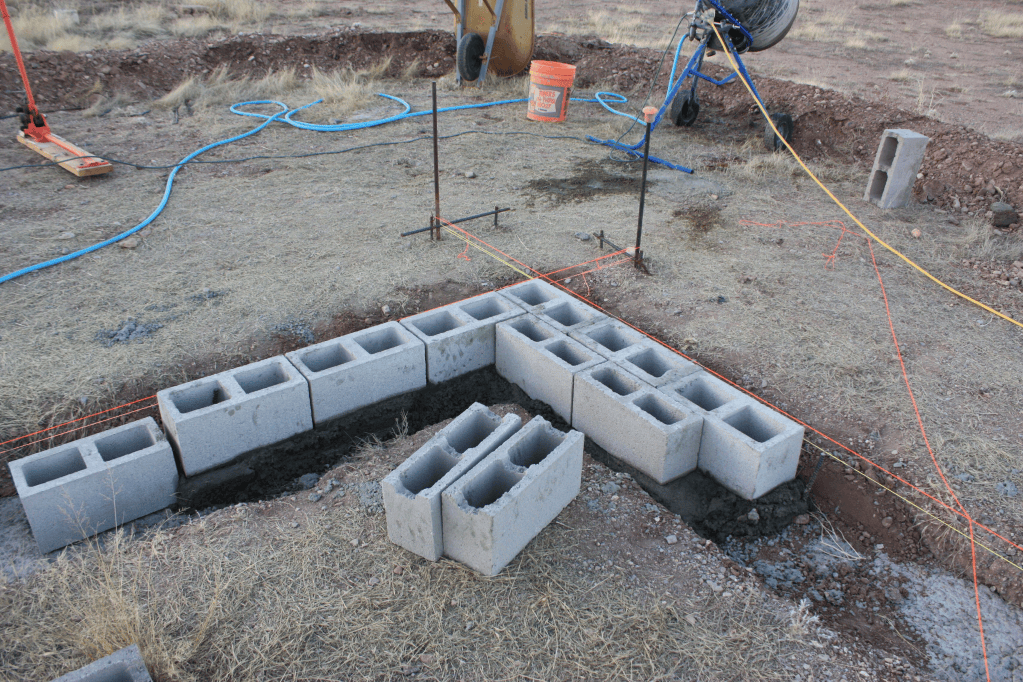
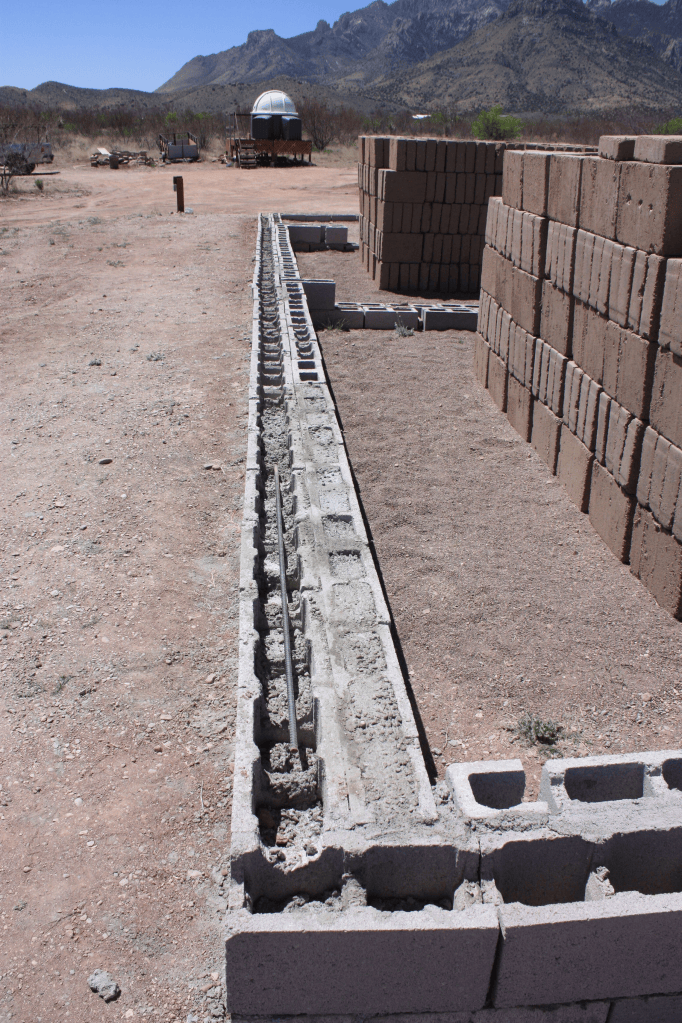
January, 2023 beginning the CMU stem wall. Hard to make it level because I didn’t get the top of the concrete footer very level.
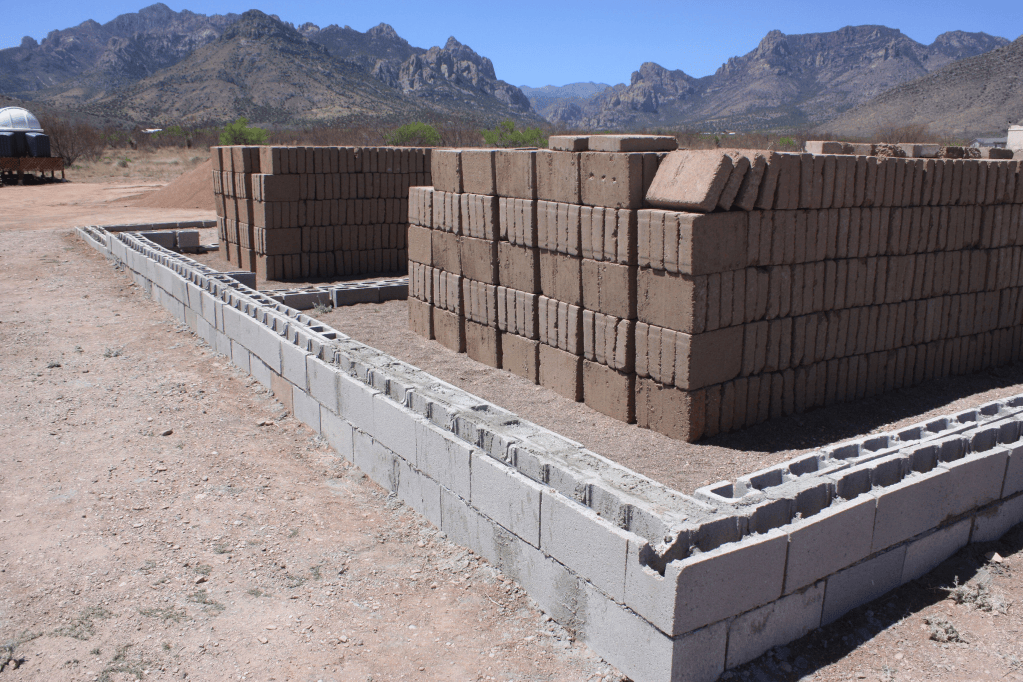
Stem wall used 8″ and 6″ CMU because the CEB was laid longways, 14″ wide.
February, 2023.
Beginnings of the block manufacturing on-site, 13 April, 2023. Top of CMU stem wall visible. Blocks measure 10″ x 14″ x 3.5″ and weigh 35 lb.
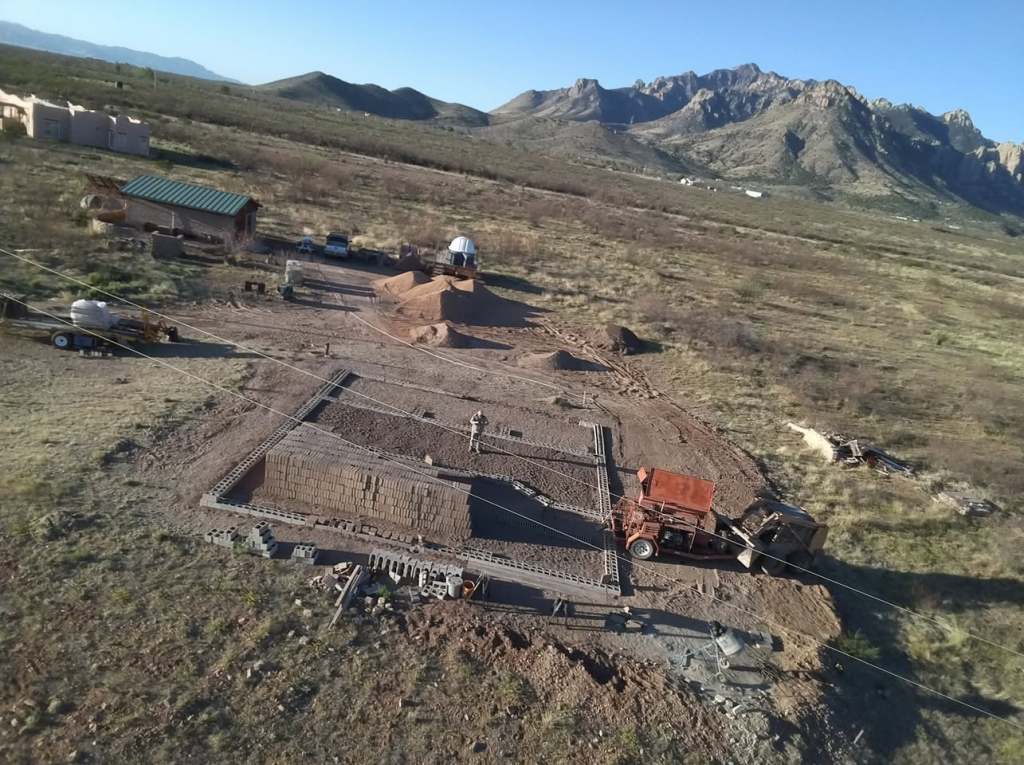
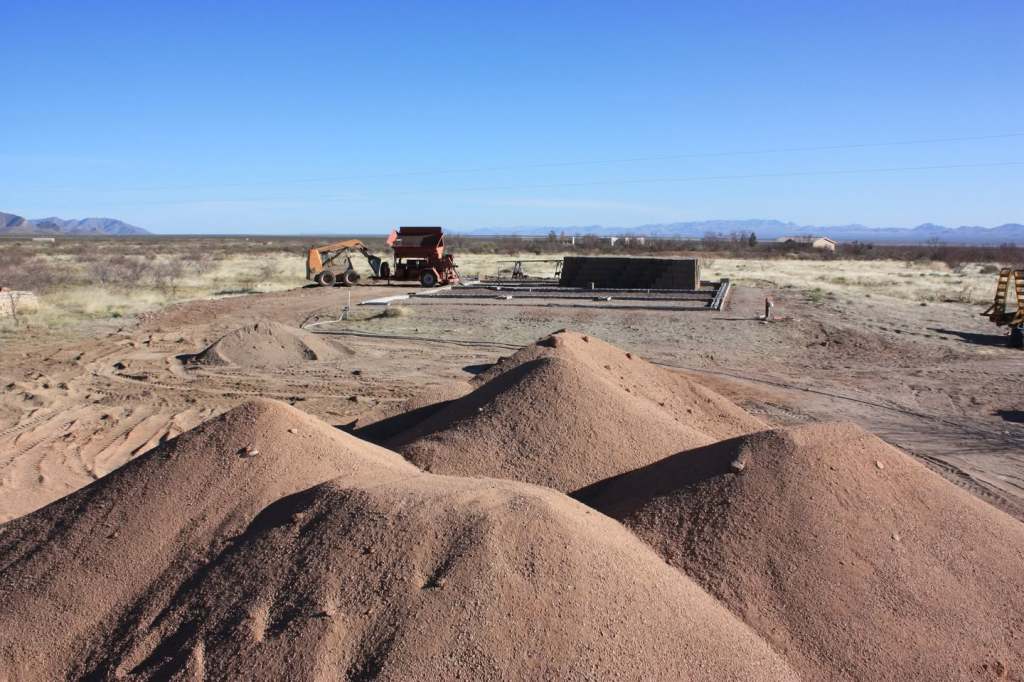
A lot of my drone shots are tilted because my little toy-like drone can’t handle wind, like, at all. Those mounds of dirt in front of the observatory are what made the blocks — smaller quantities of sand and Portland cement in mixed in with a front-loader. A guy named Adam Wayne with Arizona Adobe, I think I got that right, made these and the garage CEB, too. This whole project became in part a race against inflation, and I sure got bit by Adam’s higher prices for the house CEB. Pallets of bags of Portland are visible to the left of the dirt piles and on the flatbed trailer on the left edge.
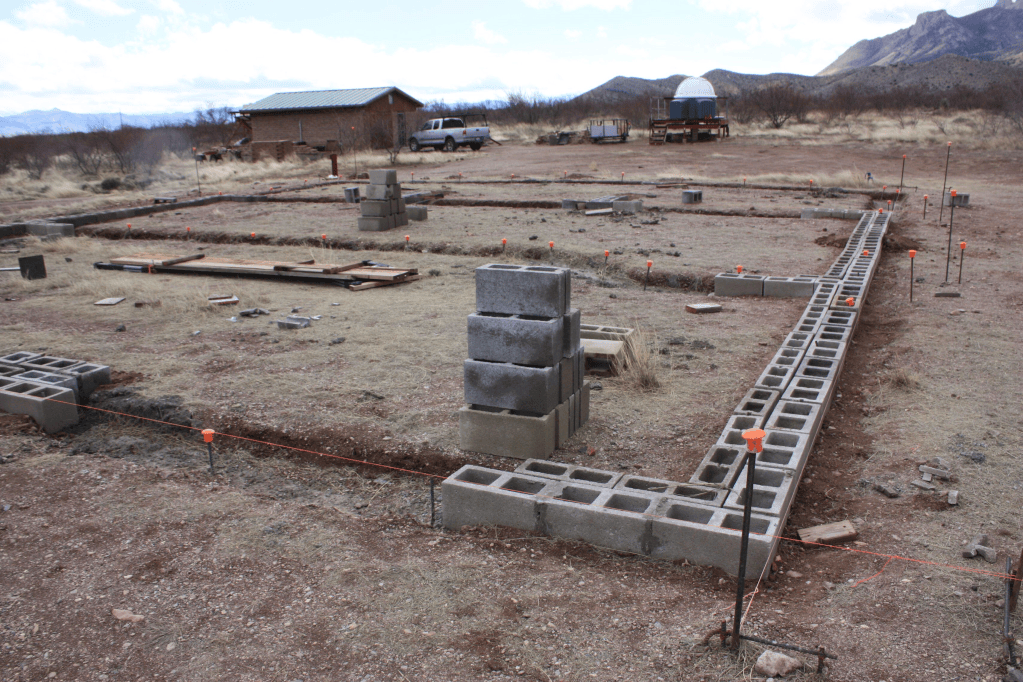
The full set of blocks, 29 April, 2023. I forget how many I had made — might have been 3,000. Beginning to fill in the stem wall with concrete.
I had my work cut out for me.
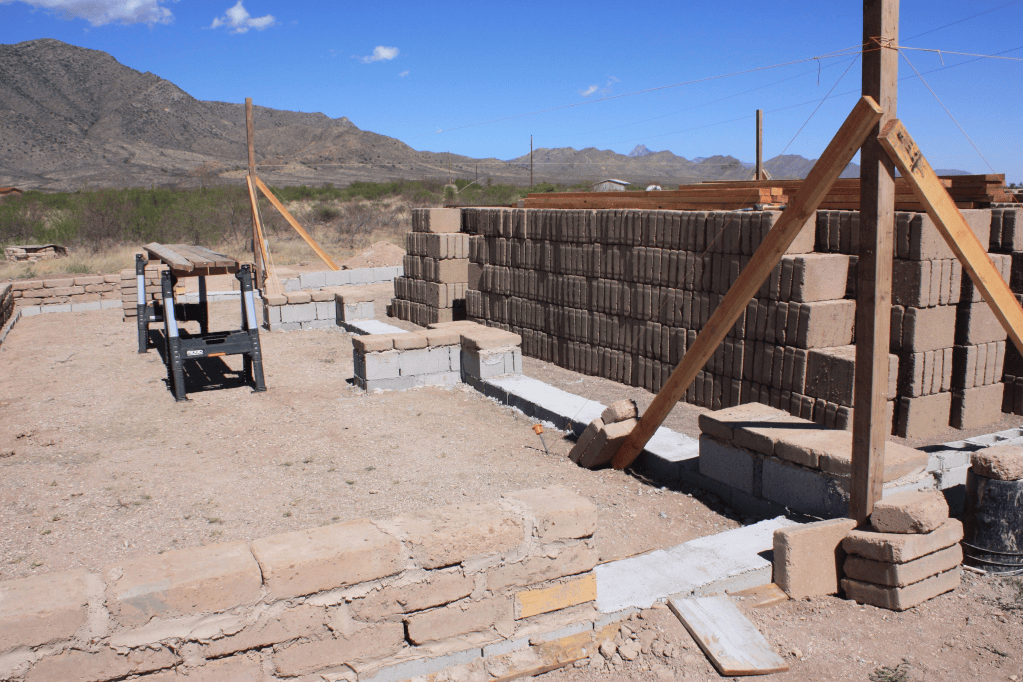
The first course of CEB on the CMU stem wall.
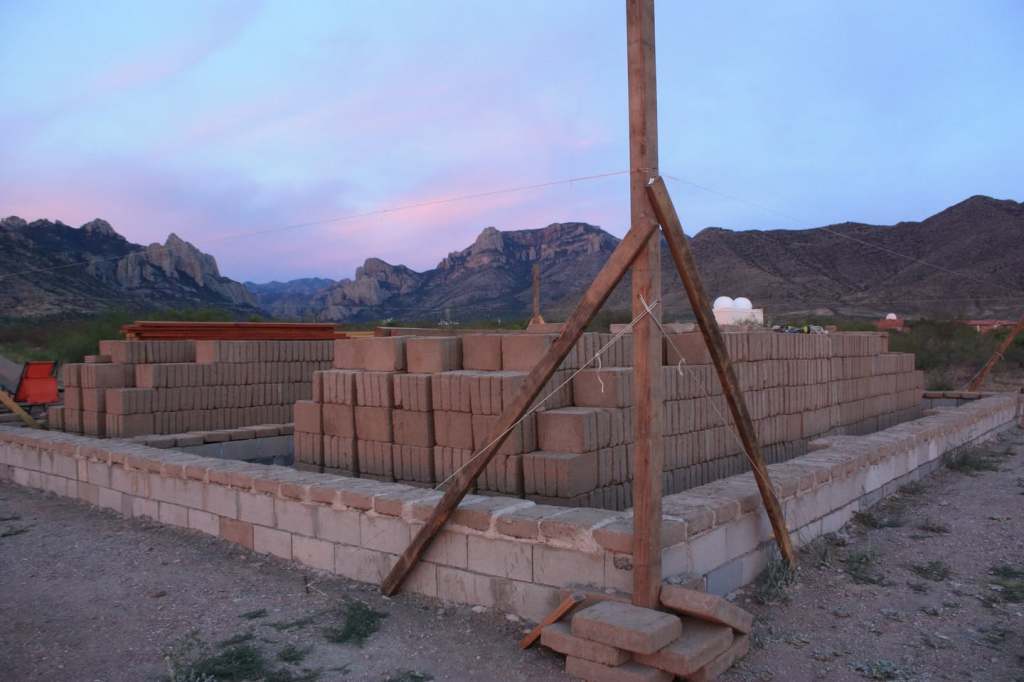
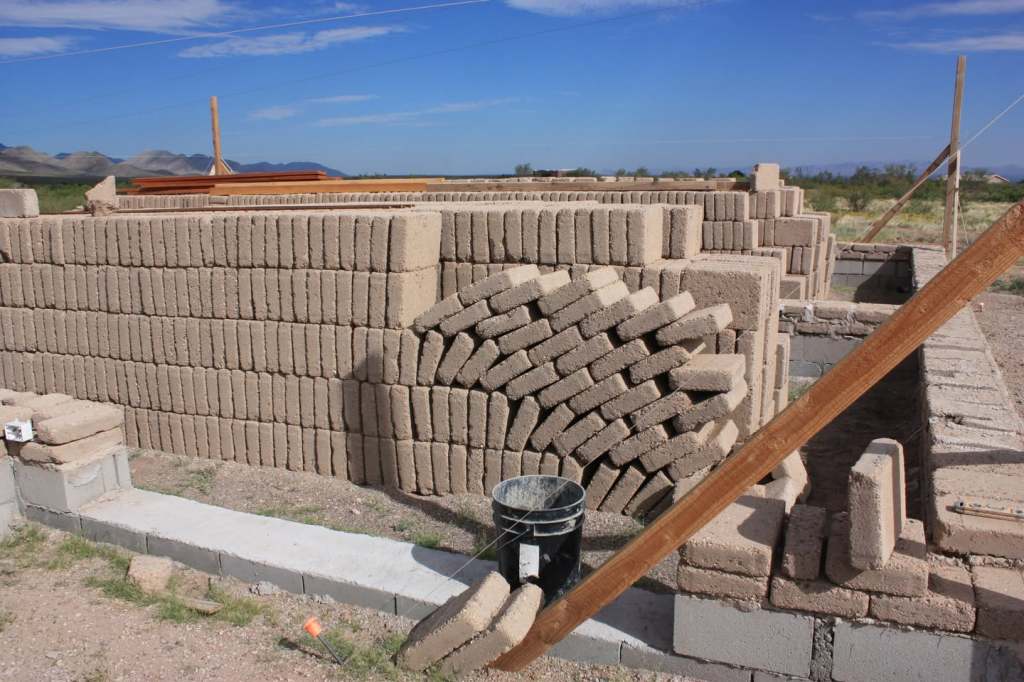
May, 2023, and stem wall finished, first CEB going on. There are four story poles, they’re called, at the corners. String lines between these posts guided the entire block-laying right to the top of the walls.
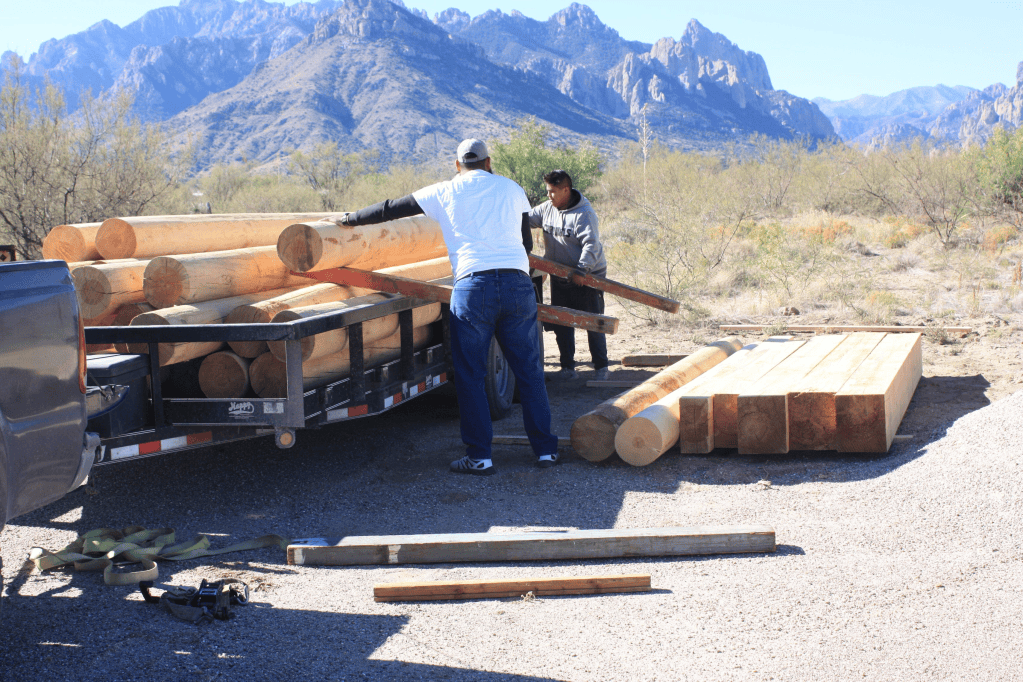
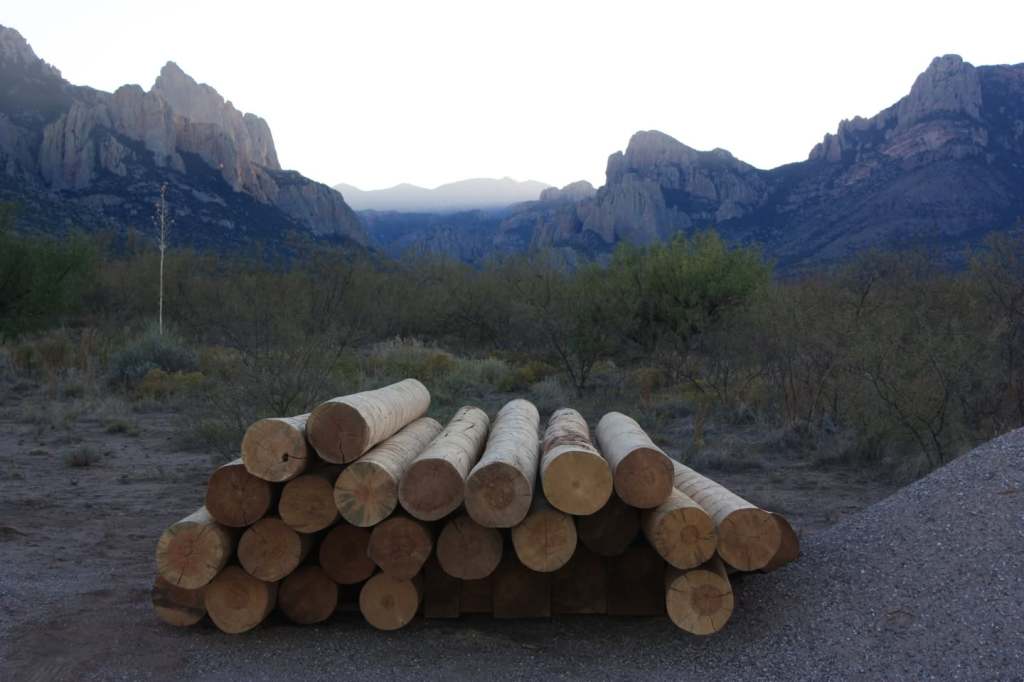
Halloween, 2023, the vigas and lintels arrive from Tucson. The square logs on the right are the lintels. All are ponderosa pine.
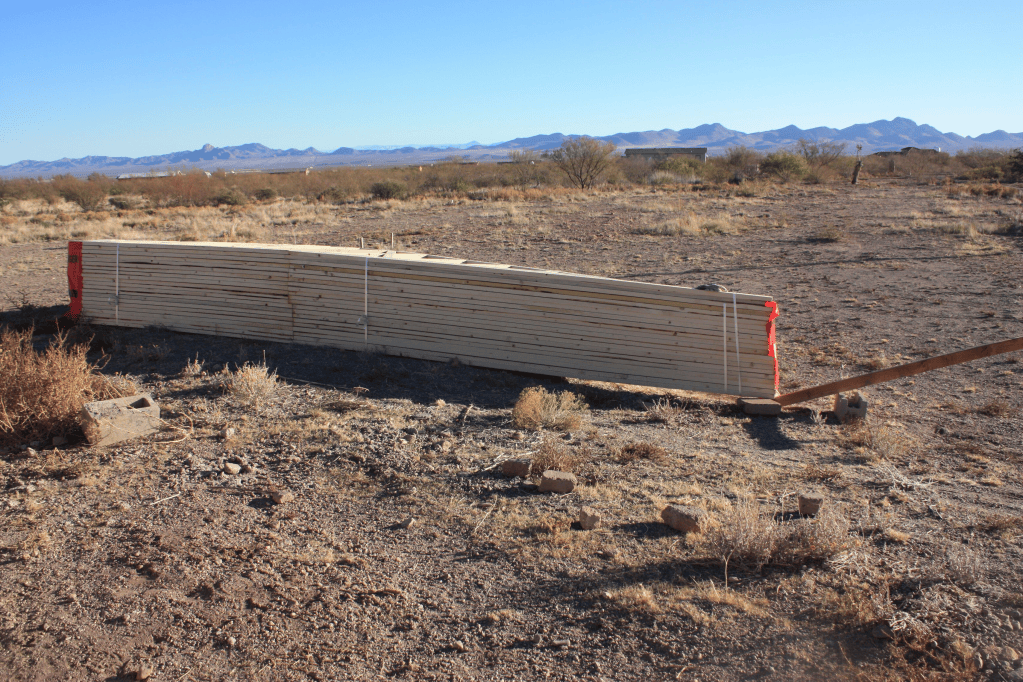
November 2023 and the trusses arrive. I was so worried they’d warp from lying on the ground but I leveled up the stack and tarped it and when they finally went up in April 2025 they were fine, to my relief. I bought them so early due to inflation fears.
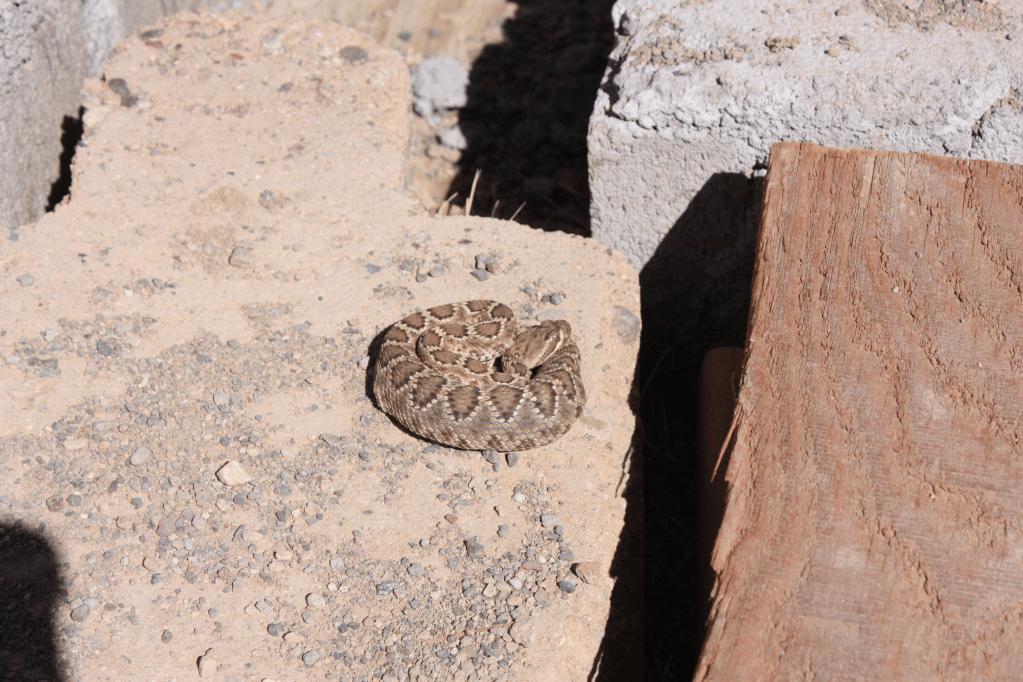
I gently relocated our visitor outside.
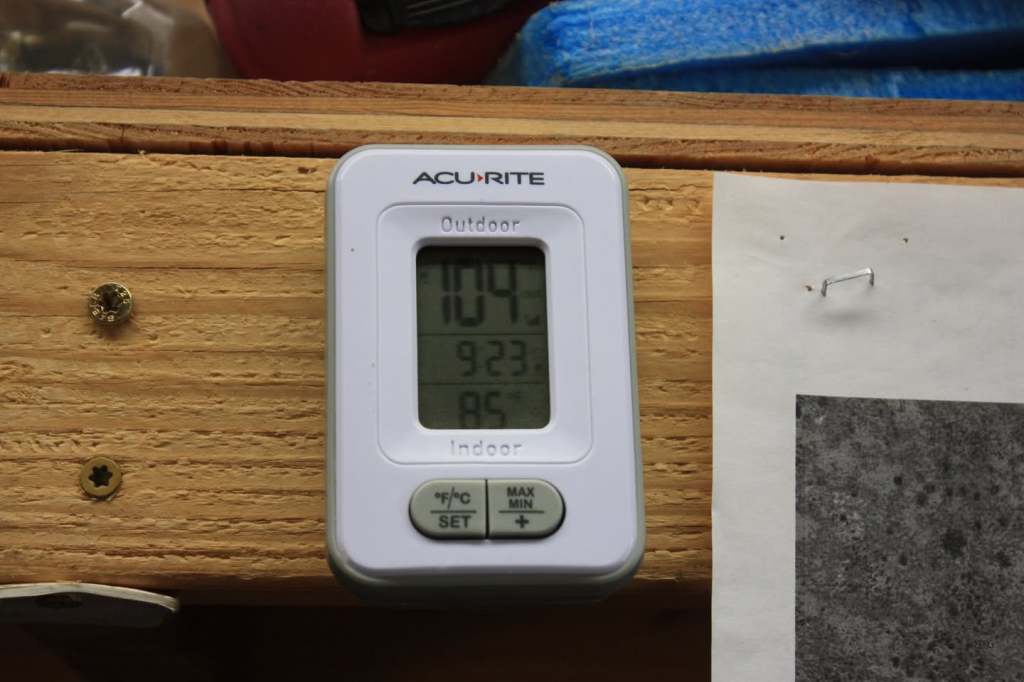
Typical hot weather readings outside (104 degrees F) to inside garage (85 degrees F). This went beyond just the passive properties of the adobe, which might have had a delta T of 10 degrees F or so. We use a ductless heat pump Luc and I installed to keep it survivable inside. The solar panels easily supply enough to run the heat pump on sunny days. I’m only screwed when it’s hot and cloudy.
The vigas are in various lengths with a 10″ diameter. Ponderosa pine I assume came from the White Mountains north of here.

Leave a Reply

Is this your new site? Log in to activate admin features and dismiss this message
Log In